
Athletic Conditioning: Speed, Strength, Injury Resilience
Athletic conditioning is not random running and gym work. Here is how I build speed, strength and injury resilience in athletes across all sports.
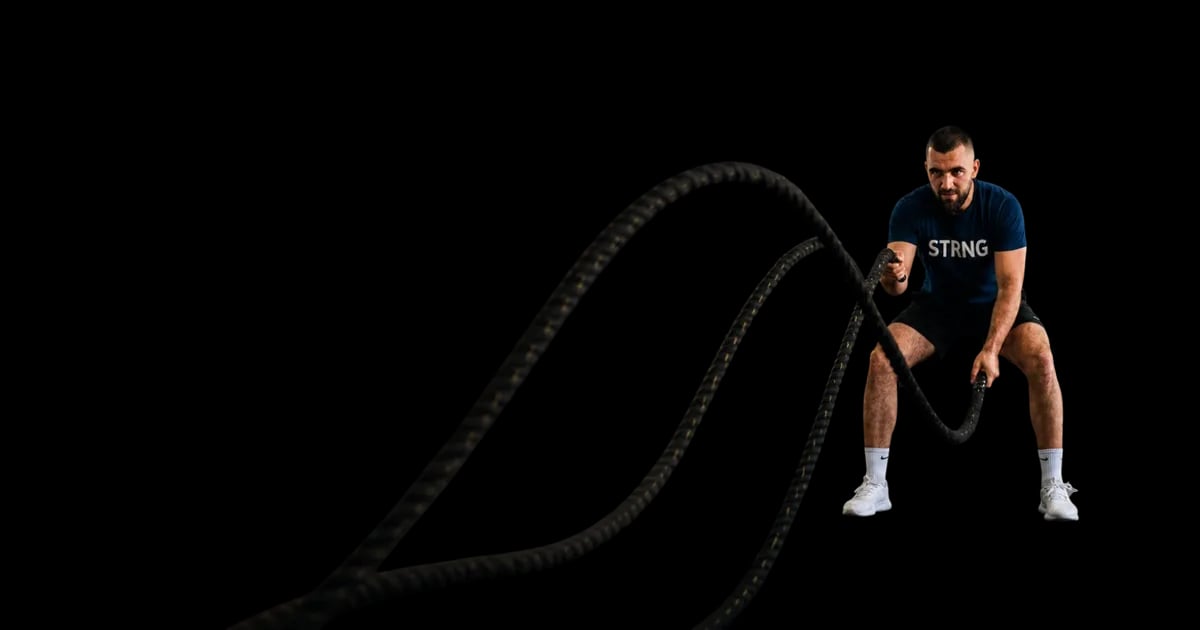
Athletic conditioning is what decides how fast you run in the final minutes of a match, how stable you are in a duel and how often injuries keep you off the field. In my work with professional athletes I have learned one thing: the difference between a good athlete and a great one is rarely just talent. Most of the time it comes down to how their physical preparation is structured across the whole year. In this article I explain how I build speed, strength and injury resilience, step by step, with no shortcuts and no one-size-fits-all templates.
What is athletic conditioning and how is it actually built?
Athletic conditioning is the systematic development of the physical qualities your sport demands: strength, speed, agility, endurance and mobility. It is built through four steps that keep repeating: assessment and testing, building a strength base, developing speed and sport-specific conditioning and ongoing injury prevention. The order is not random - without assessment you do not know where you are starting from, and without a strength base speed and agility have nothing to grow on.
One thing needs saying right away: this is not just for footballers. The same principles apply to basketball, handball, volleyball, tennis, combat sports and track athletes. The ratios and specific exercises change, but the foundations stay the same. That is why in my work I first look at the sport, the position and the competition calendar, and only then write the plan.
Everything starts with assessment and testing
I never write a program before I have seen how an athlete moves. The assessment at the start of our work gives me a baseline and reveals the weak links that later become priorities in the plan.
What I look at in the initial testing
- Movement patterns - squat, lunge, hinge, landing. This is where mobility and control limitations show up.
- Asymmetries - left-right differences in strength and stability, common in athletes who have spent years doing one-sided movements.
- Speed and agility - short sprints and change of direction.
- Explosiveness - standing and running jumps.
- Base strength - how well and with what load the athlete performs the fundamental patterns.
I repeat the tests every six to eight weeks. That is not a formality - it is how both the athlete and I see in black and white whether the plan is working, so we can correct what is not working in time.
Strength is the foundation of speed
This is the lesson young athletes find hardest to accept: speed is built in the gym. Physically speaking, a sprint is the ability to produce a large force during a very short ground contact. If that force is not there, no amount of running technique will make up for it.
That is why the base of every program I write stands on the fundamental patterns: squat, deadlift or one of its variations, press, pull and single-leg work. In a strength-building phase we typically do 3 to 5 sets of 3 to 6 reps with heavy loads and full rest periods, because the goal is force, not fatigue. Later we add faster, more explosive variations - Olympic lift derivatives, loaded jumps, throws - to turn that strength into explosiveness.
With athletes I do not care about the absolute number on the bar. What matters is relative strength: how strong you are compared to your own body weight. That is what transfers most directly to sprinting, jumping and changing direction.
Speed and agility: quality before fatigue
The biggest mistake I see in speed work is training it tired. Sprinting is a maximum-intensity skill and it is trained fresh, at the start of a session, with full recovery between reps.
What a quality speed session looks like
- Distances of 10 to 30 meters, 6 to 10 reps, with 2 to 3 minutes of rest.
- Acceleration technique: body lean, first steps, arm action.
- Change of direction first as a technique (deceleration, lowering the center of mass, foot position), and only later under fatigue and reacting to a signal.
There is no agility without quality deceleration. An athlete who cannot brake cannot explosively change direction either, and it is exactly in those situations that a large share of knee and ankle injuries happen.
Energy systems: conditioning that matches your sport
Conditioning is not one single thing. A marathon runner and a handball player are both "fit", but in completely different ways. So I first analyze the demands of the sport: how long the active phases last, how frequent the sprints are, how long the pauses are.
In practice I combine three types of work. We build the aerobic base with easy continuous and tempo runs - it speeds up recovery between intervals and between matches. I use high-intensity intervals, for example 4 times 4 minutes with active rest, to raise capacity. We do repeated sprints with short rests in the part of the season when the athlete needs to be ready for match rhythm. The order and the ratios depend on the phase of the season - preparation, competition and transition never look the same.
Injury prevention: strengthening, technique and load management
The best training is the training an athlete can do continuously, without breaks caused by injuries. In my programs prevention is not a separate session once a week - it is built into every plan.
- Strengthening the critical areas: hamstrings (Nordic eccentric work), hip adductors, calves, feet and deep trunk muscles.
- Landing and deceleration technique: we teach the body to absorb force before we increase it.
- Load management: sudden week-to-week spikes in total load are the most common injury trigger, so volume goes up gradually.
- Posture and technique correction: bad positions under heavy load always come back to bite you, which is why I correct technique from the very first session.
With some clients I also use EMS technology as a supplement, especially for deep musculature and during periods of reduced load - I wrote about it in more detail in my article on what EMS training is and how it works.
What a training week looks like around club commitments
An athlete who trains with me almost never trains only with me - there are club sessions and matches too. My job is to fit into that schedule, not to fight it. So I always look at the whole week, and when needed I coordinate with the club coach.
Example schedule around a weekend match
- The day after the match: recovery - easy movement, mobility, low intensity.
- Two days after the match: the main strength session, because there is enough time to recover before the next match.
- Midweek: speed and agility, fresh and high quality.
- One or two days before the match: short, fast and light - activation without fatigue.
The principle is simple: the hardest work as far from the match as possible, the freshest work as close to it as possible. The total sum of club and individual load has to make sense, otherwise individual training becomes a problem instead of an advantage.
Typical mistakes young athletes make
Across hundreds of coaching sessions I keep seeing the same mistakes, almost without exception:
- Skipping the gym out of fear of "muscle mass" - properly programmed strength training makes an athlete faster, not slower and heavier.
- Copying professionals' programs from the internet, with no base and no context.
- Building conditioning through endless running - long monotonous runs do not prepare you for a sport played in sprints.
- Training through pain - a small irritation ignored for months becomes an injury that costs half a season.
- Neglecting sleep and nutrition - without recovery there is no adaptation, no matter how good the training is.
- Impatience - speed and strength take months to build and only a few weeks of inactivity to lose.
Athletic conditioning in Sarajevo: how I work
I work in person in Sarajevo and online with athletes from different sports and age groups - from young athletes entering serious training for the first time to professionals whose season cannot be interrupted. Every collaboration starts with testing and a conversation about goals, schedule and injury history, and then the plan is built around your calendar, not the other way around. We measure progress with numbers from the testing, and you can see more about my approach and working with me on my page.
If you remember only one thing from this article, let it be this: athletic conditioning is a system, not a collection of random hard sessions. Test, build strength, train speed fresh, match your conditioning to your sport and protect your body with smart load management.
Training delivers the best results when the plan is built for you - your goal, your schedule and your current level. I bring years of work with professional athletes and hundreds of EMS and personal training sessions, and today I coach clients in person in Sarajevo and online. If you want a plan tailored to you, see how I work and get in touch.
FAQ
- How many conditioning sessions per week does an athlete need?
- It depends on club commitments and the phase of the season. In practice it is usually two to three individual sessions per week on top of club training, arranged so the hardest work sits as far from the match as possible. More than that often brings fatigue, not progress.
- Does strength training make athletes slower?
- No - properly programmed strength training is the foundation of speed. Sprinting requires large force in a very short ground contact, and that force is built in the gym. Athletes get slow from bad programming and accumulated fatigue, not from strength.
- At what age can a young athlete start conditioning training?
- Bodyweight exercises, movement technique and coordination can start very early. I introduce serious loading gradually, once technique is stable and the assessment shows the body is ready, always with loads adapted to the athlete's age.
- Is athletic conditioning only for footballers?
- No. The same principles - testing, a strength base, speed work, energy systems and injury prevention - apply to basketball, handball, volleyball, tennis, combat sports and every other sport. The ratios and specific drills change, but the foundations stay the same.