
EMS Training vs Classic Gym Training: Which Is Right for You?
EMS is fast and supervised; the gym is flexible and unbeatable for maximal strength. Here is my honest take on which one fits your life, budget, and goals.
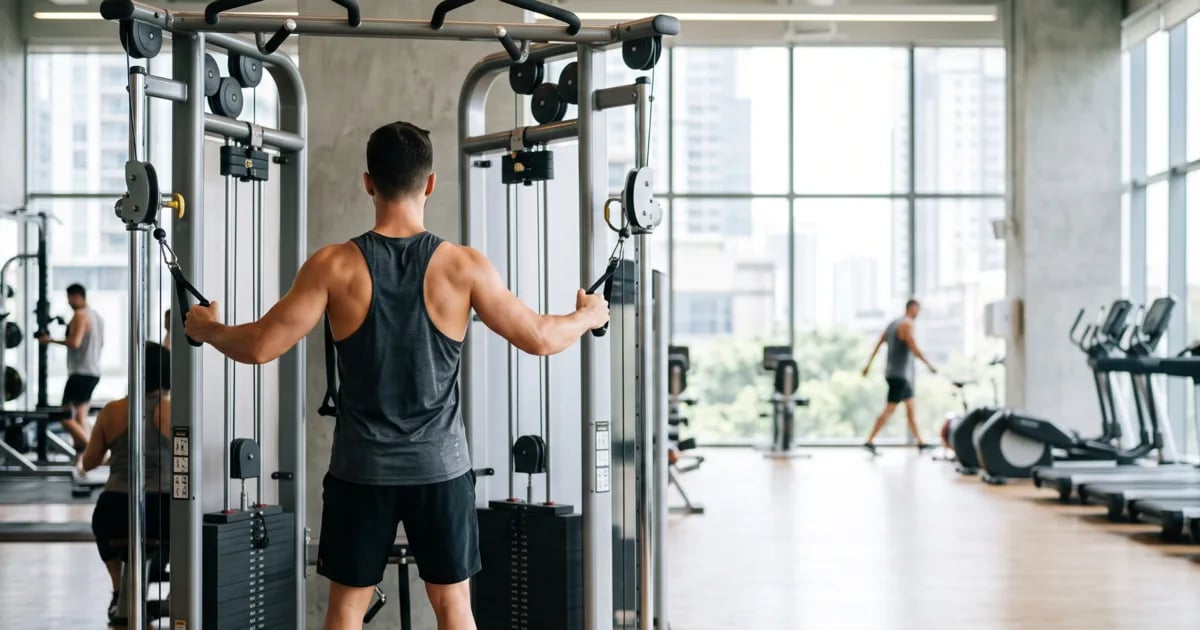
My name is Berin Ahmetbasic and I am a certified personal trainer in Sarajevo. Across more than 200 client sessions I have coached people on both electro-muscle stimulation (EMS) and classic gym training, and I hear the same question almost every week: which one is actually better? The honest answer is that neither one is universally better. They are different tools for different people. In this article I will walk you through both fairly, so you can pick what fits your life, your body, and your budget.
Quick answer
If you are very short on time, coming back from an injury or a long break, or you simply dislike gyms, EMS is a smart choice: about 20 supervised minutes, once or twice a week. If your goal is maximum muscle and strength, you enjoy training, or you are on a tighter budget, classic gym training wins. Many of my clients do best combining both.
What each one actually is
Understanding the mechanics removes a lot of the hype on both sides.
- Classic gym training. You move external load: barbells, dumbbells, machines, cables, or your own bodyweight. Your nervous system voluntarily recruits muscle to overcome that load, and you progress by adding weight, reps, or better technique over time.
- EMS training. You wear a suit with electrodes over the major muscle groups. Alongside real movements I guide you through, the device sends low-level electrical impulses that make the muscles contract more intensely than they would on their own. It is always supervised and the session is short.
Time: the biggest difference
This is where EMS clearly stands out. A full EMS session is roughly 20 minutes of active work, done once or twice a week, and every minute is supervised. Classic gym training asks for more: usually 45 to 75 minutes per session, three or four times a week, plus travel and setup. If your calendar is the real bottleneck in your life, EMS removes most of that friction.
Who EMS suits best
- Very busy people. If you can only spare one or two short slots a week, EMS gives you a real training stimulus in that window.
- Back pain and posture issues. EMS uses light external load, so it is gentle on the joints and spine while still activating deep muscles.
- Comeback and deconditioned clients. After a break, injury, or pregnancy, the supervised, low-load format is a safe on-ramp.
- People who dislike gyms. If a crowded gym drains you, a private, guided 20-minute session is far easier to keep doing.
Who classic gym training suits best
- Maximum muscle and strength. For serious size and raw strength, progressive heavy loading in the gym is still the gold standard.
- People who enjoy training. If you like the process and the time under the bar, the gym gives you room to explore and progress for years.
- Progressive overload lovers. Adding a little weight session after session is simple, measurable, and deeply effective.
- Tighter budgets. A gym membership costs far less per session than supervised EMS.
Cost and results, honestly
I will not pretend the price is the same. EMS is more expensive per session because every session is one-on-one and equipment-heavy. A gym membership, even with occasional coaching, costs less over a month.
On results, both build strength and improve body composition when you stay consistent. The gym has the edge for maximal muscle and strength because you can keep adding load indefinitely. EMS wins on time-efficiency and on strong muscle activation in a very short window. Neither is magic; consistency and nutrition still decide most of the outcome.
| Factor | EMS | Classic gym |
| Time per week | ~20 min, 1-2x | 45-75 min, 3-4x |
| Supervision | Always one-on-one | Optional |
| Cost per session | Higher | Lower |
| Max strength/muscle | Good | Best |
| Time-efficiency | Best | Moderate |
You can combine both
These are not rivals. Some of my clients do one EMS session for a fast, guided stimulus midweek and one or two gym sessions for heavy loading. It keeps training efficient without giving up long-term strength gains.
How a Sarajevo trainer helps
If you are still unsure, come and try it with me. In Sarajevo I offer EMS training, one-on-one personal training, athletic conditioning, technique correction, and comeback coaching for clients returning after a break or injury. Reach out and book a trial session, and we will match the method to your goals, your schedule, and your budget honestly, not sell you the most expensive option.
FAQ
- Is EMS training better than going to the gym?
- Neither is universally better. EMS wins on time-efficiency and supervision, while the gym wins for maximal muscle and strength and for a tighter budget. The best choice depends on your goals, schedule, and money.
- How often should I do EMS training?
- Once or twice a week is enough. A single EMS session is about 20 supervised minutes, and the intense muscle activation means you need real recovery between sessions.
- Is EMS more expensive than a gym membership?
- Yes. EMS costs more per session because every session is one-on-one and equipment-heavy. A gym membership costs less per session, especially if you train independently.
- Can I combine EMS and classic gym training?
- Absolutely. Many of my clients do one short EMS session for a fast, guided stimulus and one or two gym sessions for heavy progressive loading. Combining both keeps training efficient without losing long-term strength.